Introduction
Sports betting has become more accessible than ever before. With legal sportsbooks expanding across the United States and mobile betting apps making wagering available from virtually anywhere, millions of new bettors enter the market every year. While betting can be entertaining and potentially profitable, beginners often make mistakes that quickly drain their bankrolls.
Many new bettors focus entirely on picking winners while ignoring the principles that experienced bettors use to manage risk and make smarter decisions. The reality is that long-term success in sports betting depends just as much on discipline and strategy as it does on sports knowledge.
Understanding the most common betting mistakes can help new players avoid unnecessary losses and develop better habits from the beginning.
Betting Without a Bankroll Plan
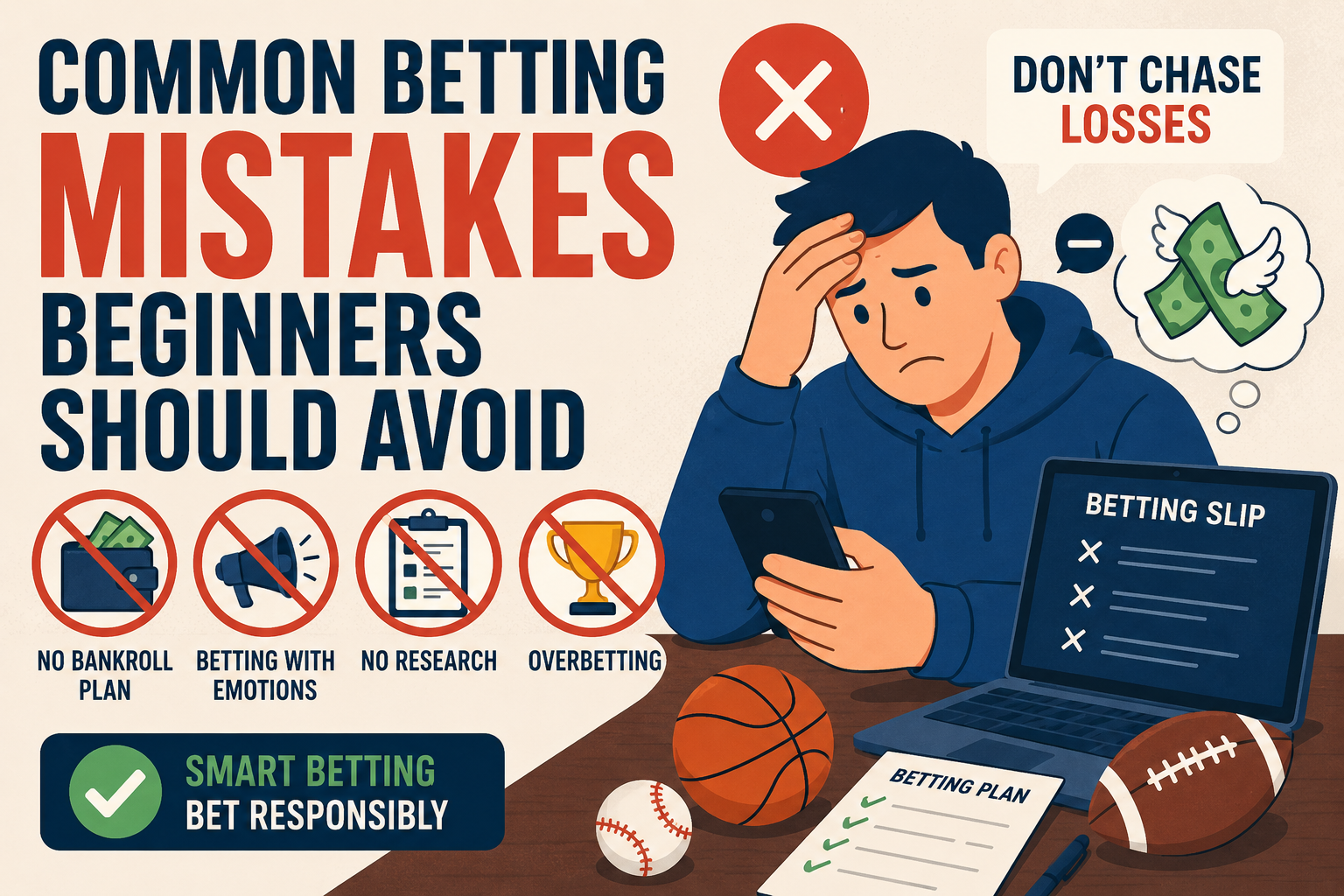
One of the biggest mistakes beginners make is betting without a dedicated bankroll. A bankroll is the amount of money specifically set aside for betting activities. Without one, it becomes easy to wager too much money on a single game or chase losses when things go wrong.
Successful bettors treat sports betting like a long-term investment rather than a quick way to make money. They determine a bankroll amount they can afford to lose and divide it into smaller units for individual wagers.
A common recommendation is to risk only 1% to 3% of your total bankroll on a single bet. This approach helps protect against inevitable losing streaks.
Chasing Losses
Few mistakes are more dangerous than chasing losses. After losing a wager, many beginners feel tempted to immediately place larger bets in an attempt to recover their money.
This emotional reaction often leads to poor decision-making. Instead of carefully analyzing opportunities, bettors begin making impulsive wagers based on frustration.
Even professional bettors experience losing streaks. The difference is that experienced bettors stick to their strategy rather than increasing their risk after a loss.
Accepting losses as part of the betting process is essential for long-term success.
Ignoring Line Shopping
Many beginners open an account with a single sportsbook and place all their bets there. While convenient, this approach can cost significant money over time.
Different sportsbooks often offer slightly different odds on the same event. A point spread may be -3 at one sportsbook and -2.5 at another. Moneyline prices can also vary considerably.
Line shopping means comparing odds across multiple sportsbooks before placing a wager. Even small differences can have a major impact on profitability over hundreds of bets.
Experienced bettors constantly search for the best available price because they understand that every advantage matters.
Betting on Too Many Games
Beginners often believe that more bets create more opportunities to win. In reality, betting on every game usually leads to lower-quality decisions.
The most successful bettors are selective. They focus on games and leagues they understand well and avoid forcing action when no strong opportunities exist.
Quality is far more important than quantity. Placing fewer well-researched bets is generally more effective than making dozens of wagers based on intuition alone.
Overvaluing Favorite Teams
Many sports fans struggle to separate their personal loyalties from objective betting decisions. They naturally want their favorite teams to win and may overestimate their chances of success.
Sportsbooks understand this behavior and often adjust lines accordingly because they know public bettors tend to support popular teams.
Successful betting requires objectivity. The goal is not to bet on the team you like most. The goal is to find value where the odds do not accurately reflect the true probability of an outcome.
Ignoring Statistics and Research
Another common mistake is relying entirely on instinct. While sports knowledge is valuable, betting decisions should be supported by research and data.
Modern sports offer a wealth of information, including advanced statistics, injury reports, matchup analysis, and performance trends.
Bettors who consistently ignore available information place themselves at a disadvantage compared to those who take time to study each matchup.
Research does not guarantee winning bets, but it can improve decision quality over the long run.
Misunderstanding Betting Odds
Many beginners do not fully understand how betting odds work. They focus only on potential payouts rather than implied probability.
For example, a large underdog may offer an attractive return, but the odds reflect a much lower chance of winning. Likewise, favorites win more often but typically provide smaller payouts.
Understanding moneyline odds, point spreads, totals, and implied probability is essential for evaluating betting opportunities correctly.
Falling for Betting Myths
Sports betting is full of myths and misconceptions. Some bettors believe teams are “due” for a win after a losing streak. Others assume that a team that has won several games in a row must continue winning.
These assumptions often ignore the actual factors that influence performance.
Each game should be evaluated independently based on current conditions, available information, and realistic probabilities rather than emotional narratives.
Placing Parlays Too Frequently
Parlays are popular because they offer the possibility of large payouts from small wagers. However, they are also significantly harder to win than single bets.
Many beginners become attracted to long-shot parlays with huge potential returns while overlooking the low probability of success.
While parlays can be entertaining, relying on them as a primary betting strategy is rarely effective. Most experienced bettors place the majority of their wagers on single bets where they can better evaluate value.
Ignoring Closing Line Value
Closing Line Value, often called CLV, measures whether a bettor obtained better odds than those available when the game started.
Many successful bettors use CLV as an important performance indicator. Consistently beating the closing line suggests that a bettor is identifying value before the market fully adjusts.
Beginners often focus exclusively on win-loss results and overlook this important concept.
Letting Emotions Control Decisions
Emotional betting is one of the fastest ways to lose money. Excitement, frustration, confidence, and fear can all lead to poor decisions.
Professional bettors strive to remain disciplined regardless of recent results. They follow predetermined strategies and avoid making impulsive wagers.
Developing emotional control may be one of the most valuable skills a bettor can learn.
The Importance of Patience
Many newcomers expect immediate success. When profits do not arrive quickly, they often abandon their strategy or begin taking unnecessary risks.
Sports betting should be viewed as a long-term endeavor. Even excellent bettors experience periods of losses due to the natural variance present in sports.
Patience allows bettors to stay focused on process rather than short-term results.
Conclusion
Most beginner betting mistakes have little to do with sports knowledge and much more to do with discipline, bankroll management, and decision-making. Chasing losses, betting emotionally, ignoring research, and failing to shop for the best odds can all significantly reduce long-term profitability.
By recognizing these common pitfalls and developing responsible betting habits early, new bettors can improve their chances of long-term success. The goal is not simply to win individual bets but to make consistently smart decisions over time.