Introduction
Most beginner bettors focus on a simple question: “Who is going to win?” While predicting winners is important, experienced sports bettors often ask a different question: “Are the odds offering value?” This distinction is one of the biggest differences between recreational and professional betting.
The concept that helps answer this question is Expected Value, commonly referred to as EV. Understanding EV allows bettors to evaluate whether a wager is mathematically profitable over the long term rather than judging bets solely by individual outcomes.
Many successful bettors consider Expected Value the foundation of profitable sports betting. Even though the concept may sound intimidating at first, it is actually quite straightforward once you understand the basic principles.
What Is Expected Value?
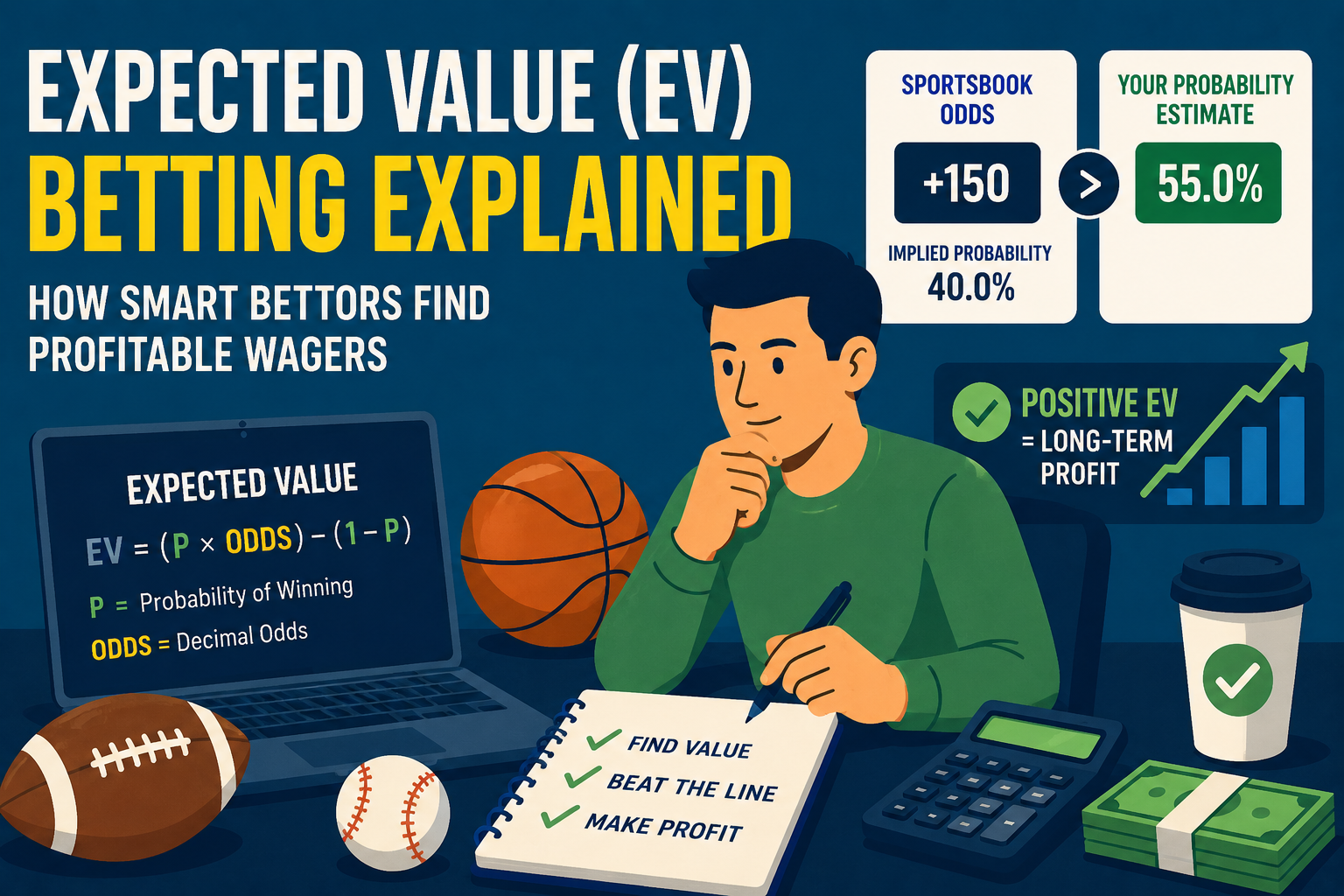
Expected Value is a mathematical calculation that estimates the average result of a wager if the same bet were placed many times under identical conditions.
In simple terms, EV helps determine whether a bet is worth making based on the relationship between probability and payout.
A positive EV bet theoretically generates profit over the long run. A negative EV bet theoretically loses money over time.
This does not mean every positive EV bet wins. Individual results can vary significantly. Expected Value focuses on long-term outcomes rather than short-term results.
Why Expected Value Matters
Sports betting outcomes are influenced by variance. Even the best betting opportunities can lose on any given day.
Imagine flipping a coin. If a sportsbook offered odds that paid significantly more than the true probability of the coin landing heads, that wager would have positive Expected Value. You could still lose several flips in a row, but over hundreds or thousands of flips, the favorable odds would eventually generate profit.
The same principle applies to sports betting. Professional bettors seek situations where the sportsbook’s odds underestimate the true probability of an outcome.
Understanding Probability
To calculate Expected Value, bettors first need an estimate of the actual probability of an event occurring.
Suppose a bettor believes a team has a 60% chance of winning a game. If the sportsbook’s odds imply only a 50% chance of winning, the bettor may have found a valuable opportunity.
The challenge is accurately estimating probability. This requires research, statistical analysis, injury evaluation, matchup assessment, and market awareness.
The better a bettor becomes at estimating true probabilities, the more useful Expected Value becomes.
How Sportsbook Odds Create Value Opportunities
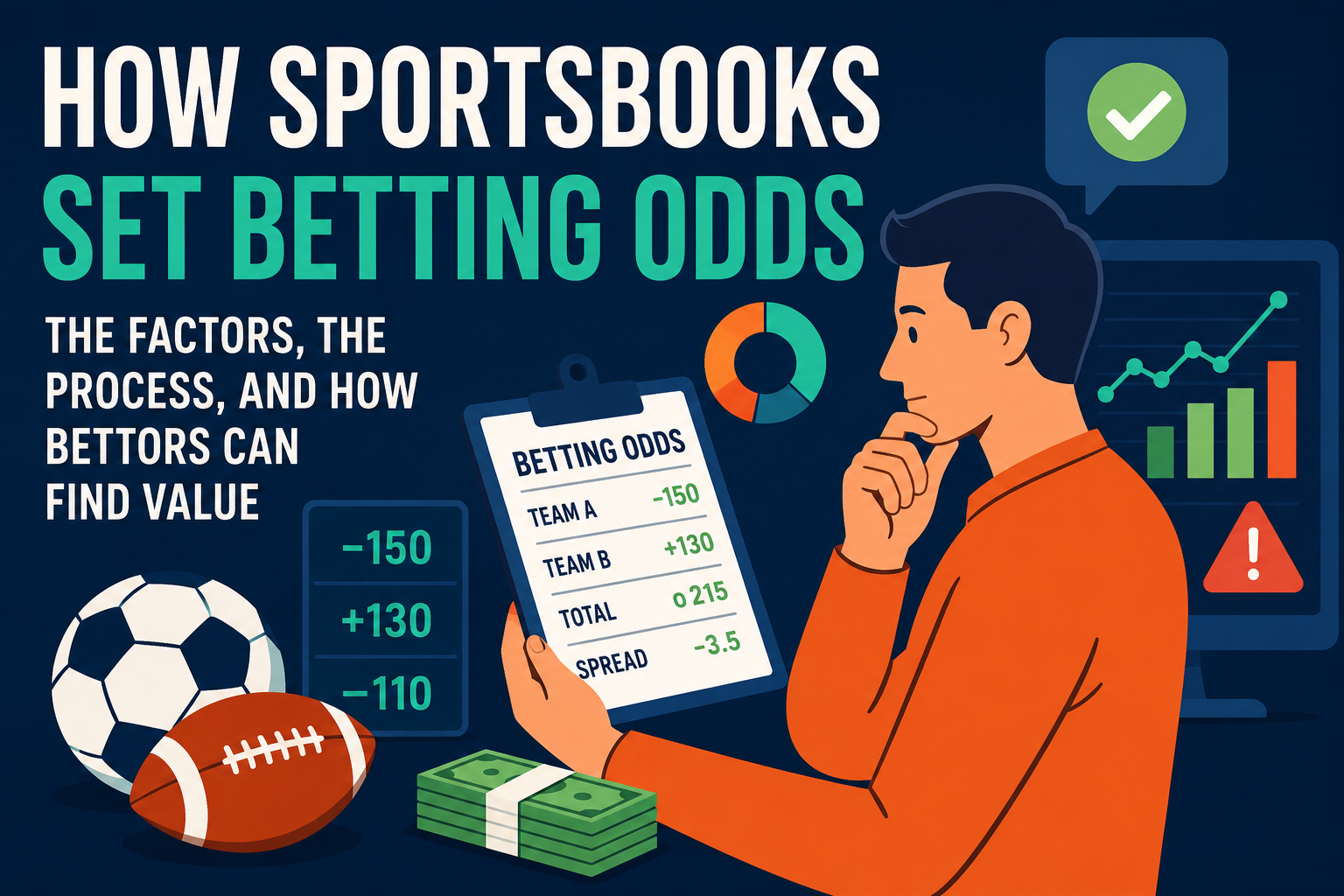
Sportsbooks are extremely sophisticated, but they are not perfect. Their odds reflect market expectations, risk management considerations, and available information.
Because sports are inherently unpredictable, sportsbooks occasionally misprice certain events. These pricing discrepancies create opportunities for bettors who identify probabilities more accurately than the market.
Value betting is essentially the process of finding and exploiting these discrepancies.
Positive EV vs Negative EV
Positive EV Bets
A positive EV wager occurs when the bettor believes the true probability of winning is greater than the probability implied by the odds.
These bets may not always win immediately, but they should generate profit over a large sample size.
Professional bettors focus almost exclusively on positive EV opportunities because they understand that long-term profitability depends on consistently making mathematically favorable decisions.
Negative EV Bets
A negative EV wager occurs when the sportsbook’s odds offer less value than the actual probability warrants.
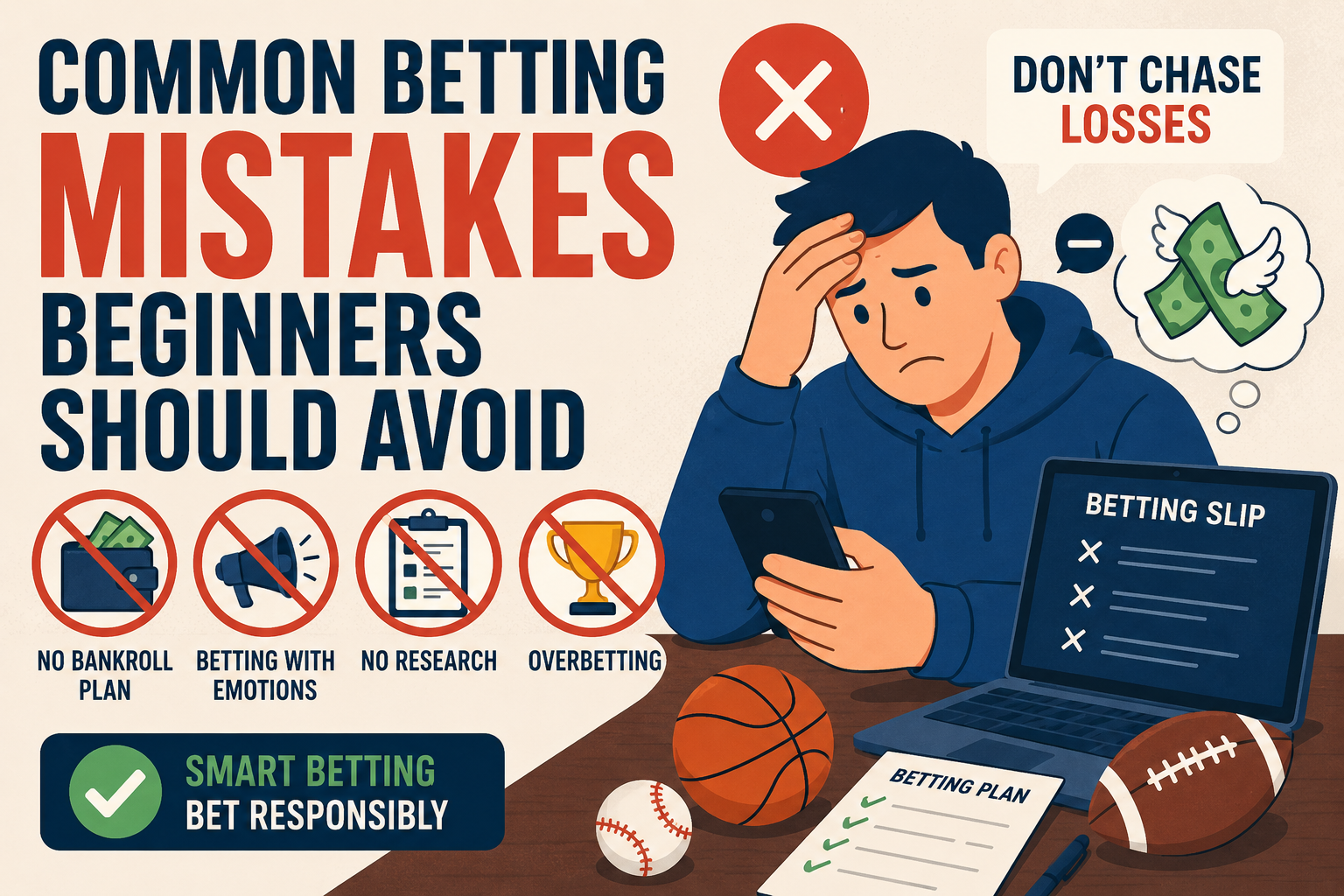
Many recreational bettors unknowingly place negative EV bets because they wager based on emotion, loyalty, or public narratives rather than objective analysis.
Even if some negative EV bets win, repeatedly making them usually leads to losses over time.
The Difference Between Winning and Value
One of the most misunderstood concepts in sports betting is the difference between winning a bet and making a good bet.
A bettor can make a poor wager and still win because sports involve randomness. Conversely, a bettor can make an excellent positive EV wager and lose due to an unexpected outcome.
This distinction is critical because focusing only on short-term results can lead bettors to abandon profitable strategies or continue using losing ones.
Successful bettors evaluate the quality of their decisions rather than judging themselves solely by individual results.
Expected Value and Line Shopping
Line shopping is one of the easiest ways to improve Expected Value.
Different sportsbooks often offer slightly different odds on the same event. While the differences may appear small, they can significantly impact profitability over hundreds of wagers.
For example, obtaining +110 instead of +100 may not seem important for a single bet. However, consistently securing better prices improves Expected Value and increases long-term returns.
This is why experienced bettors maintain accounts at multiple sportsbooks and compare odds before placing wagers.
Expected Value in Different Betting Markets
Moneyline Bets
Moneyline betting is often the simplest market for identifying EV opportunities because bettors only need to evaluate the probability of a team winning outright.
Point Spreads
Point spreads introduce additional complexity because bettors must evaluate not only who wins but also by how much.
Market inefficiencies can occasionally emerge when public sentiment heavily favors one side.
Player Props
Player prop markets have become increasingly popular. Because sportsbooks must create thousands of individual player lines, mistakes can occur more frequently than in major markets.
This makes player props particularly attractive for bettors who specialize in statistical analysis.
Closing Line Value and EV
Closing Line Value (CLV) is closely connected to Expected Value.
If a bettor consistently places wagers at better odds than the closing line, it often indicates that they are identifying positive EV opportunities before the broader market adjusts.
Many professional bettors view CLV as one of the strongest indicators of long-term betting skill.
While winning percentages can fluctuate due to variance, consistently beating the closing line suggests a bettor is finding value.
Common Mistakes When Using EV
Overestimating Probabilities
Many bettors become overconfident in their predictions and assign unrealistically high probabilities to outcomes.
Accurate probability estimation is difficult and requires objective analysis.
Focusing on Short-Term Results
Expected Value works over large sample sizes. Judging an EV strategy after only a few bets can produce misleading conclusions.
Patience is essential when evaluating betting performance.
Ignoring Variance
Even positive EV bettors experience losing streaks. Variance is a natural part of sports betting and should not be mistaken for a flawed strategy.
Building an EV-Focused Betting Strategy
Bettors interested in using Expected Value should focus on improving their ability to estimate probabilities, comparing sportsbook prices, tracking results, and maintaining disciplined bankroll management.
The objective is not to predict every game correctly. Instead, it is to consistently identify situations where the odds are more favorable than the true probability of an outcome.
This mindset transforms betting from simple prediction into a probability-based decision-making process.
Conclusion
Expected Value is one of the most important concepts in sports betting. It helps bettors move beyond guessing winners and focus on finding profitable opportunities based on mathematics and probability.
While no strategy guarantees short-term success, consistently making positive EV bets provides the strongest foundation for long-term profitability. Understanding value, managing risk, and maintaining discipline can help bettors make smarter decisions and improve their overall results over time.